Alang Faces Scrutiny as Sanctioned Vessels Seek Recycling
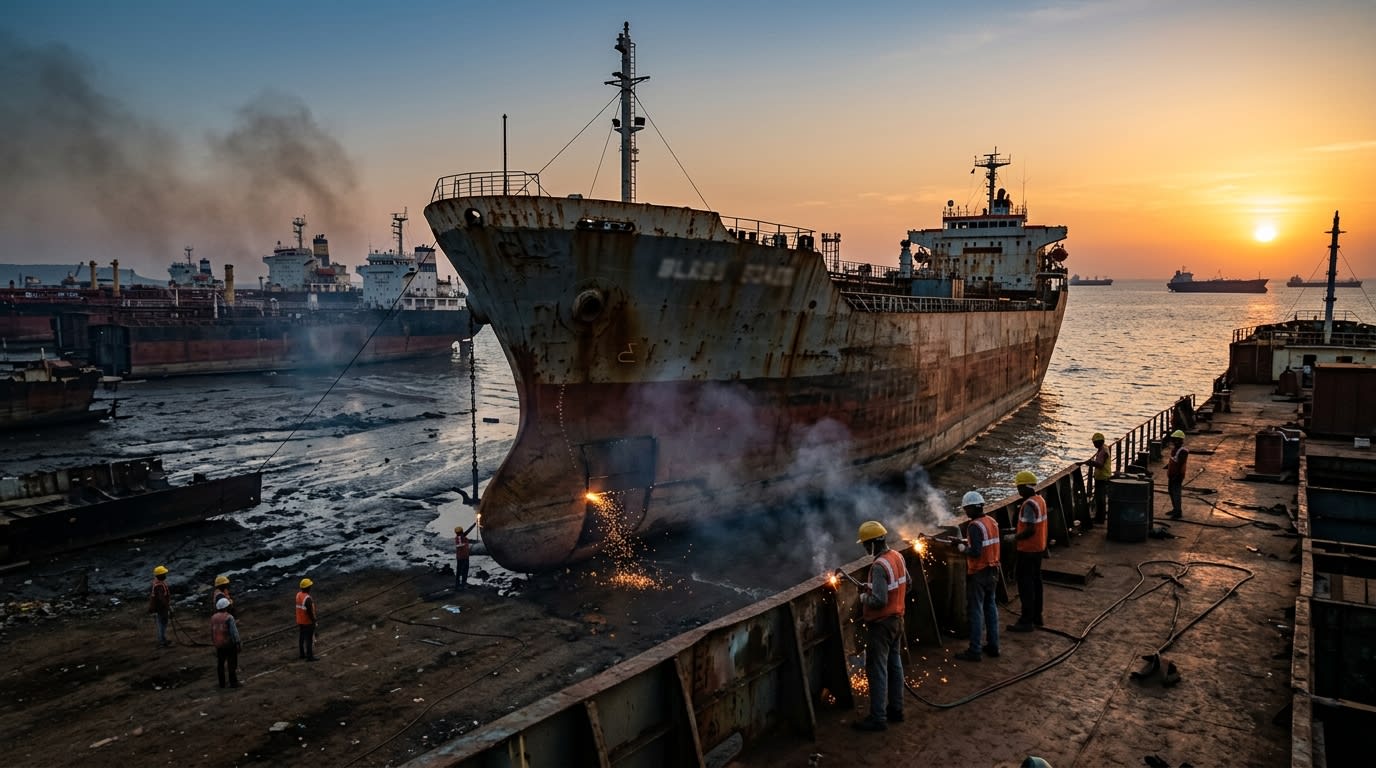
India's prominent ship-breaking yard in Alang, Gujarat, is reportedly becoming a destination for vessels operating under international sanctions, raising concerns.
Alang Faces Scrutiny as Sanctioned Vessels Seek Recycling
India's Alang ship-breaking yard in Gujarat, a global leader in vessel dismantling, is reportedly attracting ships operating under various international sanctions. This trend is drawing increased scrutiny towards the facility, raising questions about compliance with global regulations and the potential implications for India's maritime sector.
The arrival of sanctioned vessels at Alang presents a complex challenge for Indian authorities and the ship-breaking industry. These ships often belong to entities or countries facing restrictions, making their movement and transactions contentious. Industry experts suggest that such vessels frequently employ elaborate methods to obscure their origins and ownership, including multiple changes of flag, transfers of ownership to shell companies, and disabling their Automatic Identification Systems (AIS) to avoid detection during transit.
While Alang remains a crucial hub for metal recycling and provides significant employment, its engagement with vessels from the 'dark fleet'—ships that deliberately conceal their identity or activities—carries considerable risks. Accepting these vessels could inadvertently lead to India being associated with sanction evasion, potentially inviting secondary sanctions or reputational damage on the international stage. It also complicates due diligence processes for environmental and labour safety standards, which are paramount in the ship-breaking industry.
The situation underscores the need for robust regulatory oversight and stringent vetting mechanisms by Indian maritime and customs authorities. Ensuring that ships arriving for recycling are thoroughly screened for any sanction-related issues is critical. This approach would help safeguard India's position in global trade and reinforce its commitment to international maritime laws, while balancing the economic benefits derived from the ship-recycling sector.

US President Trump Unveils Venezuela Oil Deal, Aims to Lower Global Energy Prices

Samsung India’s Profit Plunges 36% to ₹7,228 Crore in FY26 Amidst Stiff Competition
