Dinosaur Feather Discovery in Montana Offers Rare Glimpse into Prehistoric Life
A 2016 discovery in Montana, where a researcher found a rock later revealed by scans to contain a remarkably preserved dinosaur feather, underscores new insights into ancient life.
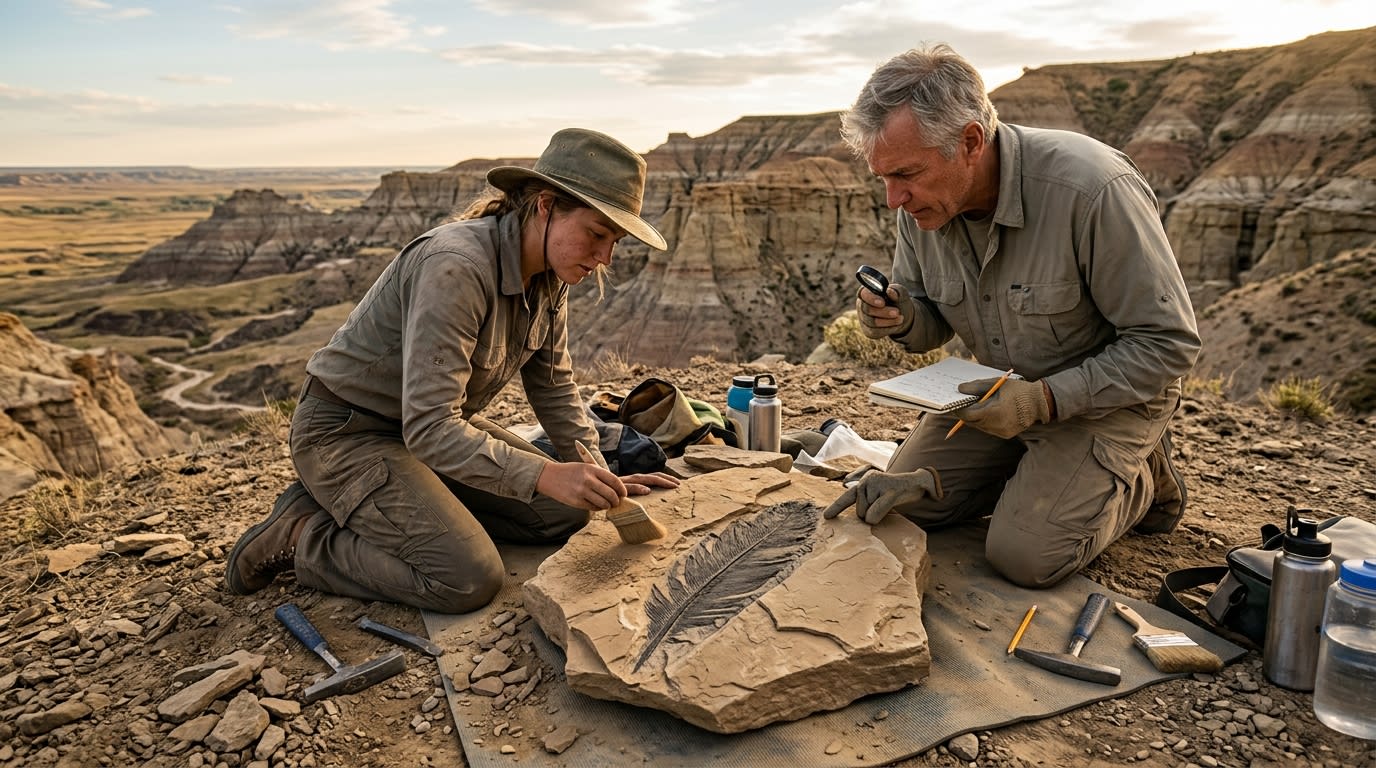
In a significant palaeontological find dating back to 2016, a researcher in Montana, United States, unearthed a rock specimen that has since revealed an exceptionally preserved dinosaur feather through advanced scanning techniques. This discovery offers a rare, detailed glimpse into the ancient world, providing valuable evidence about the plumage and biology of dinosaurs.
The identification of such a delicate biological structure within fossilised rock highlights the remarkable preservation capabilities of geological processes and the power of modern scientific analysis. Feathers are crucial for understanding the evolutionary link between dinosaurs and birds, offering insights into their thermoregulation, display, and even potential flight capabilities in certain species.
While specific details regarding the dinosaur species or the exact type of feather remain under scientific scrutiny, the very existence of such a well-preserved specimen allows researchers to study its microstructure, pigmentation patterns, and other features that are rarely fossilised. This kind of research is pivotal for reconstructing the appearance and behaviour of creatures that roamed the Earth millions of years ago, challenging previous assumptions about their physiology and lifestyle.
Such global discoveries resonate within India's own burgeoning palaeontological community, which actively contributes to the understanding of prehistoric life, particularly through finds in regions like Gujarat and the Deccan Traps. International collaborations and shared scientific knowledge from finds like the Montana feather are vital for advancing the collective understanding of Earth's ancient ecosystems, benefiting researchers worldwide, including those in India, and inspiring future generations of scientists.

17-Year-Old Innovator Develops Wearable for Vehicle Detection

Hugh Jackman Backs Australian Sanctuary Campaign to Protect Koalas