Exploring the Universe's Most Enigmatic Stars
From dense neutron stars to theoretical quark stars, the cosmos is home to stellar objects that defy conventional understanding, pushing the boundaries of physics.
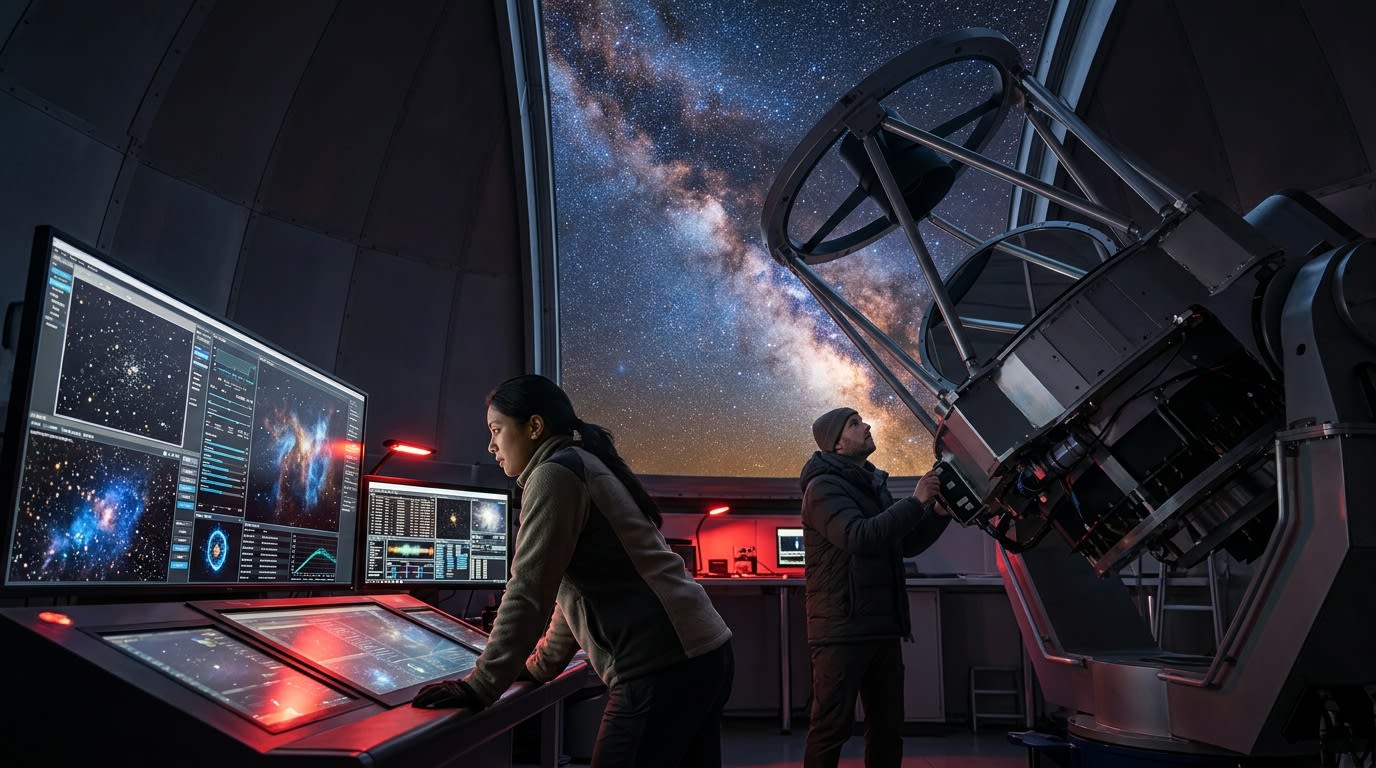
The cosmos is a vast expanse teeming with celestial wonders, many of which continue to baffle astronomers. Among these are the so-called "strange stars" or exotic stellar objects, remnants of massive stars that have reached the end of their life cycles. These celestial bodies are not merely distant twinklers but laboratories of extreme physics, offering invaluable insights into the fundamental laws governing our universe.
What makes these stars truly enigmatic is their composition and the conditions within them. Unlike main-sequence stars like our Sun, which fuse hydrogen, exotic stars represent states of matter under unimaginable pressures and densities. Examples include neutron stars, which are incredibly dense remnants where protons and electrons have been crushed into neutrons, and their rapidly spinning counterparts, pulsars and magnetars, emitting powerful radiation across the electromagnetic spectrum.
The study of these unusual stellar objects is crucial for advancing our understanding of fundamental physics, including gravity in its most extreme forms and the behaviour of matter under conditions impossible to replicate on Earth. By observing their properties and interactions, scientists can test theories like general relativity and explore the potential existence of even more exotic states, such as quark stars, where matter might exist as a "soup" of quarks.
Astrophysicists globally are dedicated to unravelling these cosmic mysteries. India, with its burgeoning space science programmes and active research community, plays a significant role in this international endeavour. Indian observatories and researchers contribute to the global pool of knowledge, helping to map the universe and understand its most extreme phenomena. This collective pursuit underscores humanity's relentless quest to comprehend our place in the cosmos.
As technology advances and new observational tools become available, the discovery of even more unusual stellar objects is highly anticipated. Each new finding promises to deepen our appreciation for the universe's complexity and push the boundaries of what we know about stars, matter, and the very fabric of space-time.

17-Year-Old Innovator Develops Wearable for Vehicle Detection

Hugh Jackman Backs Australian Sanctuary Campaign to Protect Koalas