How Britain's Industrial Revolution Forged Colonial India's Economy
Discover how the British Industrial Revolution, starting in 1760, transformed India from a global manufacturing hub into a raw material supplier for British factories, profoundly reshaping its economy and society under colonial rule.
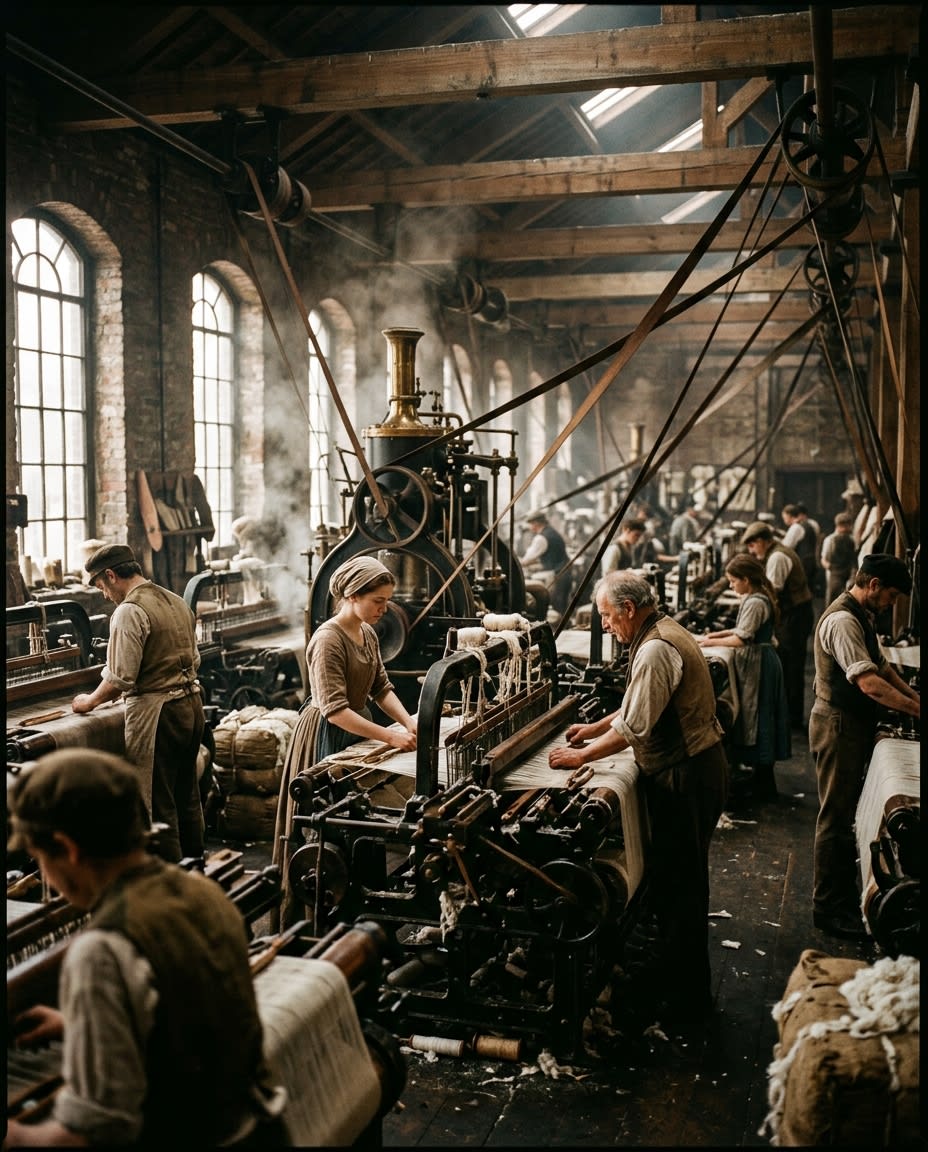
The Industrial Revolution, originating in Great Britain in the late 18th century, marked a pivotal shift in human history. Characterized by the mechanization of production, the invention of new machines like the power loom and the steam engine, and the establishment of factories, it transformed agrarian and handicraft economies into industrial and urban ones. This period of rapid technological innovation and economic restructuring had far-reaching consequences, not least for India, then a jewel in the British colonial crown.
Before the advent of industrialization in Britain, India was a major global economic power. Its vibrant textile industry, particularly the production of fine cotton and silk, was renowned worldwide. Indian artisans produced goods that were highly sought after in European markets, and India boasted a sophisticated network of trade and manufacturing. Its rich natural resources, skilled labor, and established trade routes made it a significant player in global commerce.
However, as British factories began to churn out goods at an unprecedented scale, their demand for raw materials intensified, and they simultaneously sought new markets for their manufactured products. India, with its vast resources and huge population, became central to this industrial ambition. The British East India Company, and later the British Crown, systematically reoriented India's economy to serve the needs of the burgeoning British industry.
This meant transforming India from a producer of finished goods into a supplier of raw materials like cotton, indigo, jute, and tea, and a captive market for British manufactured textiles, machinery, and other goods. The impact on India's indigenous industries was devastating. Indian handloom weavers, unable to compete with the cheaper, mass-produced textiles from British mills, faced widespread unemployment and destitution. Traditional crafts and manufacturing centers declined, leading to a process often described as "de-industrialization."
While Britain experienced unprecedented economic growth and prosperity, India witnessed economic exploitation and impoverishment, with its wealth siphoned off to fuel the imperial power. To facilitate the extraction of raw materials and the distribution of British goods, the British invested in infrastructure in India, primarily railways, roads, and telegraph lines. While these developments laid the foundation for modern infrastructure, their primary purpose was to serve colonial interests – moving raw materials to ports for shipment to Britain and transporting finished British goods to inland markets. This network also aided in administrative control and military movement, further solidifying British dominance.
The economic transformation brought about by the Industrial Revolution had profound social and political consequences for India. It created new classes of laborers and merchants, altered traditional social structures, and led to widespread economic distress that contributed to famines and poverty. The stark contrast between India's potential and its colonial reality fueled a growing sense of nationalism and resentment against British rule. Indian intellectuals and leaders increasingly recognized the exploitative nature of the colonial economy, laying the groundwork for the independence movement.
Even after independence, the legacy of the Industrial Revolution's impact on India persisted. The economic structure inherited from colonial rule, with its emphasis on raw material exports and a relatively underdeveloped industrial base, posed significant challenges for the newly independent nation. India's efforts to industrialize and diversify its economy in the post-colonial era were, in many ways, a response to the historical distortions imposed by the British Industrial Revolution. The event remains a crucial chapter in understanding India's economic trajectory and its place in the global economy today.

India's Diplomatic Stand: How Nehru Navigated the Suez Crisis

The 1969 Presidential Election: When a 'Conscience Vote' Divided a Nation's Dominant Party
