How India Redrew Its Map: The States Reorganisation Act of 1956
Explore how India redrew its internal map based on language in 1956 with the States Reorganisation Act, a pivotal decision shaping the nation's identity and administration.
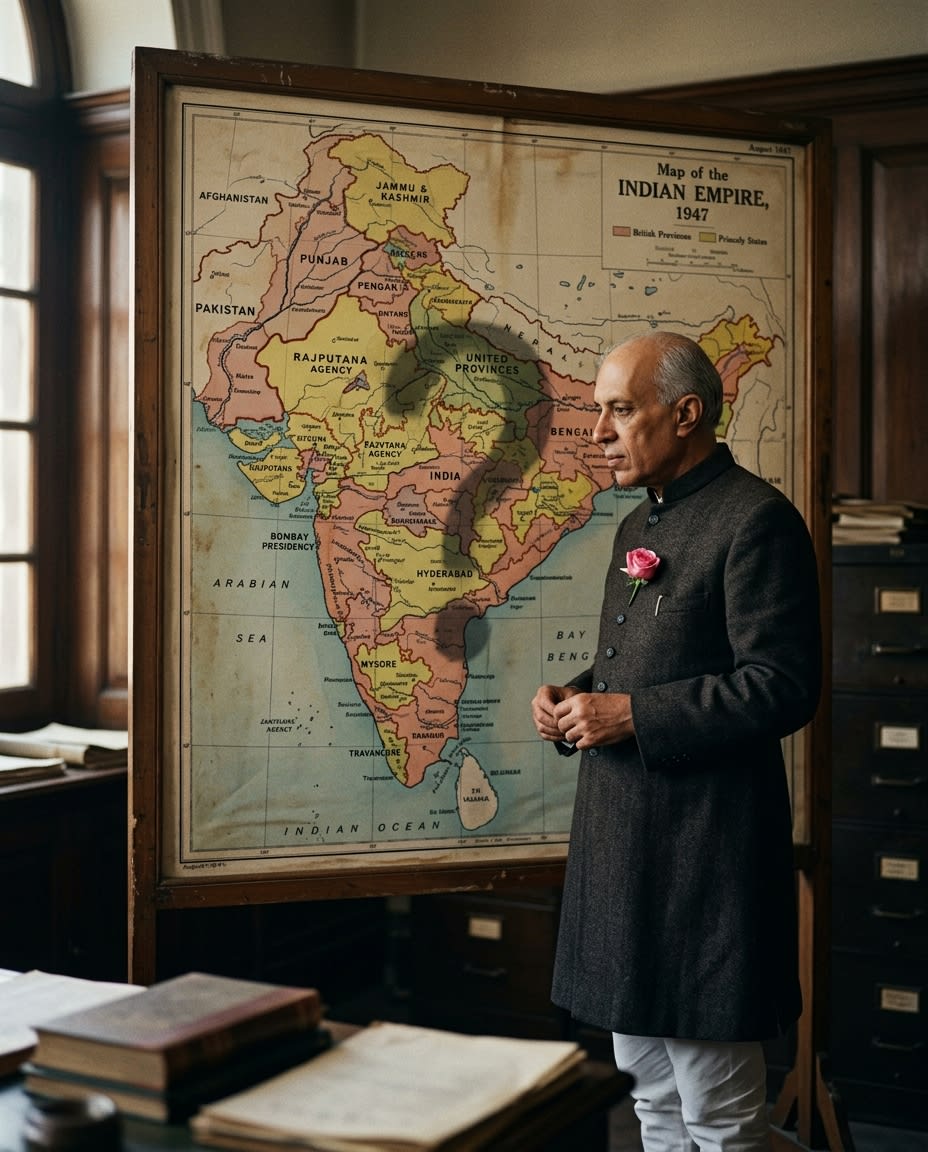
The dawn of India's independence in 1947 brought with it not just the euphoria of freedom but also the immense challenge of nation-building. While Sardar Vallabhbhai Patel masterfully integrated over 500 princely states into the Indian Union, the internal administrative boundaries inherited from the British Raj remained largely intact. These boundaries, often drawn for colonial convenience, paid little heed to the diverse linguistic and cultural identities that thrived within the subcontinent. This mismatch soon ignited powerful demands for states to be reorganised along linguistic lines, setting the stage for one of independent India's most significant political transformations.
The demand for linguistic states was not new; it had been a significant part of the Indian National Congress's agenda even before independence. Leaders like Mahatma Gandhi had supported the idea, believing that administration in local languages would foster greater participation and democratic depth. However, post-independence, Prime Minister Jawaharlal Nehru and other national leaders initially harboured reservations. They feared that linguistic reorganisation could fragment the newly unified nation, rekindling regional loyalties at a time when national unity was paramount, especially in the wake of Partition's trauma.
The simmering discontent eventually boiled over, particularly in the Telugu-speaking regions of Madras State. The movement for a separate Andhra state, led by figures like Potti Sreeramulu, gained intense momentum. Sreeramulu's fast unto death in December 1952, and his subsequent demise, proved to be a critical turning point. His sacrifice sent shockwaves across the nation, forcing the government's hand. In the immediate aftermath, Prime Minister Nehru announced the formation of Andhra State, making it the first state to be created on a linguistic basis.
Recognising the widespread nature of the demand, the government appointed the States Reorganisation Commission (SRC) in December 1953, headed by Justice Fazal Ali, with H.N. Kunzru and K.M. Panikkar as members. The Commission was tasked with examining the question of states reorganisation impartially, considering factors like linguistic and cultural homogeneity, administrative viability, financial implications, and national unity. After extensive consultations and deliberations, the SRC submitted its report in 1955, recommending the creation of 16 states and 3 centrally administered territories.
The recommendations of the SRC, though generally accepted, were not without controversy. Intense debates erupted in Parliament and across the country as various groups vied for specific boundaries or the inclusion of certain regions. The government, led by Prime Minister Nehru, navigated these complex negotiations, making adjustments where necessary. Finally, in November 1956, the States Reorganisation Act was enacted. This landmark legislation abolished the previous system of Part A, B, C, and D states and established 14 states and 6 Union Territories, fundamentally redrawing the political map of India.
The States Reorganisation Act of 1956 was a monumental exercise in democratic state-building. While it addressed long-standing linguistic aspirations, it also laid the groundwork for future challenges, such as demands for smaller states based on sub-regional identities or administrative convenience. Nevertheless, it cemented the principle that linguistic identity could coexist with national unity, demonstrating India's commitment to accommodating its vast diversity within a federal framework. The Act remains a testament to India's early leaders' vision and pragmatism, shaping the administrative and cultural landscape of the nation that we recognise today.

The Nation's Farewell: Bal Gangadhar Tilak's Ashes Immersed

Napoleon's Eastern Gambit: How a French Alliance Sealed Tipu Sultan's Fate
