India's Legacy of Protest Fasts: A Historical Overview from Gandhi to Sonam Wangchuk
As Sonam Wangchuk undertakes a fast for Ladakh's special status, we revisit India's long history of impactful protest fasts, from Mahatma Gandhi to Irom Sharmila.
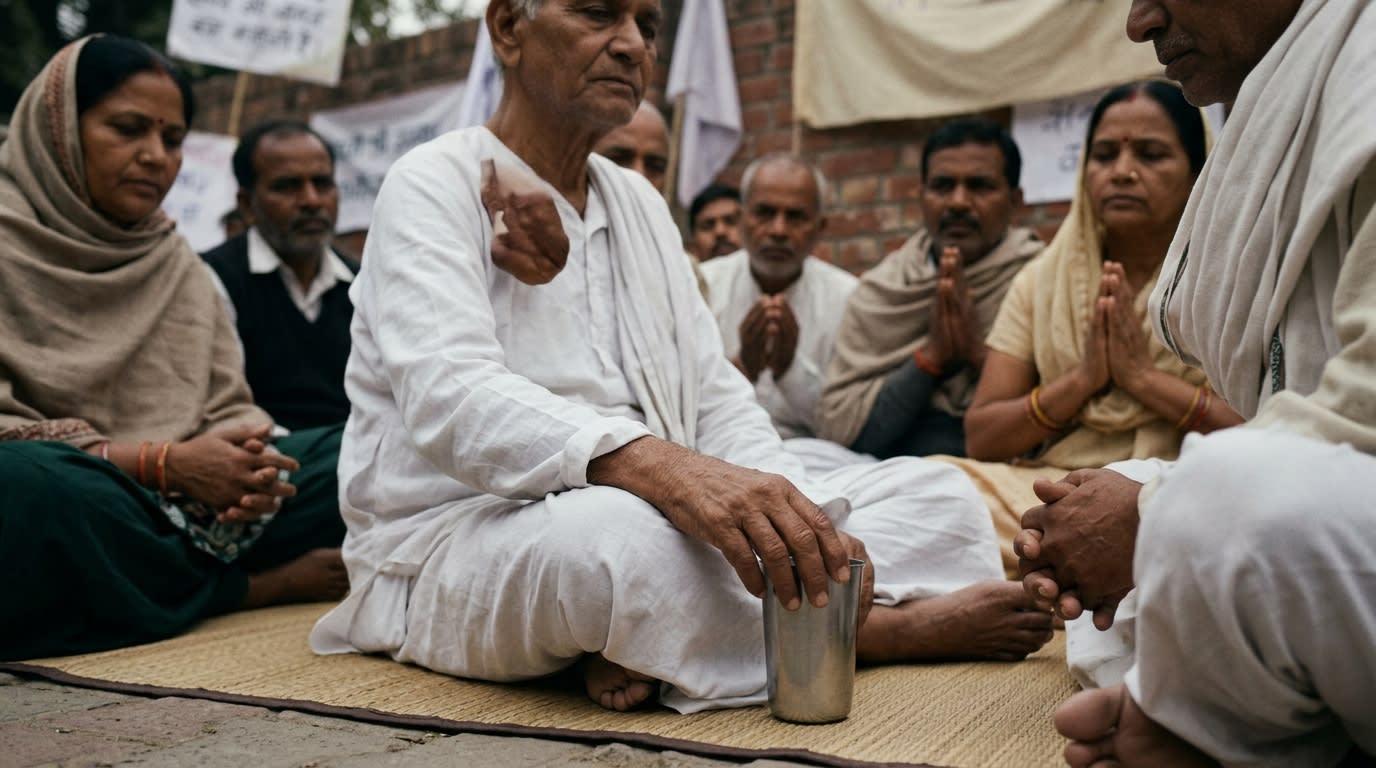
Sonam Wangchuk, the renowned educationist and environmentalist, has recently undertaken a fast in Ladakh, advocating for the region's inclusion under the Sixth Schedule of the Constitution and protection for its fragile environment. His latest act of non-violent protest draws attention to a powerful tradition deeply embedded in India's political and social landscape: the protest fast.
Historically, this form of dissent has been employed by figures across the spectrum, often to galvanise public opinion, pressure authorities, or highlight critical injustices. Mahatma Gandhi famously used fasts as a potent weapon during the freedom struggle, not only against British rule but also to address internal social issues like communal disharmony and untouchability. His fasts were often deeply moral acts, aimed at self-purification and appealing to the conscience of the nation.
Beyond Gandhi, other iconic figures have also resorted to hunger strikes with profound impact. Revolutionary Bhagat Singh, while imprisoned during the Lahore Conspiracy Case, undertook a prolonged fast demanding better treatment and rights for political prisoners. His sacrifice, though not unto death by fast, highlighted the plight of freedom fighters. Decades later, Potti Sriramulu's fast unto death in 1952 proved instrumental in the formation of Andhra State, tragically culminating in his demise after 58 days, which spurred immediate governmental action.
More recently, Irom Chanu Sharmila of Manipur became a symbol of protracted resistance, fasting for an astonishing 16 years against the Armed Forces (Special Powers) Act (AFSPA) in her home state. Her relentless stand, though ultimately not achieving the repeal of the law, brought global attention to human rights concerns in the North-East.
These instances underscore the enduring power of the protest fast in India – a strategy that, despite its varying outcomes, continues to be a potent expression of dissent and a call for justice, resonating through generations and movements, now echoed in Sonam Wangchuk's current endeavour.

Tejashwi Yadav's Absence Sparks Debate Amidst Bihar's Political Stir

Sonam Wangchuk's Hunger Strike: Summary Required for Report
