Jantar Mantar: From Celestial Observatory to Epicentre of Public Protest
Delhi's Jantar Mantar, originally an 18th-century astronomical observatory built by Maharaja Sawai Jai Singh II, has transformed into a key site for public protests.
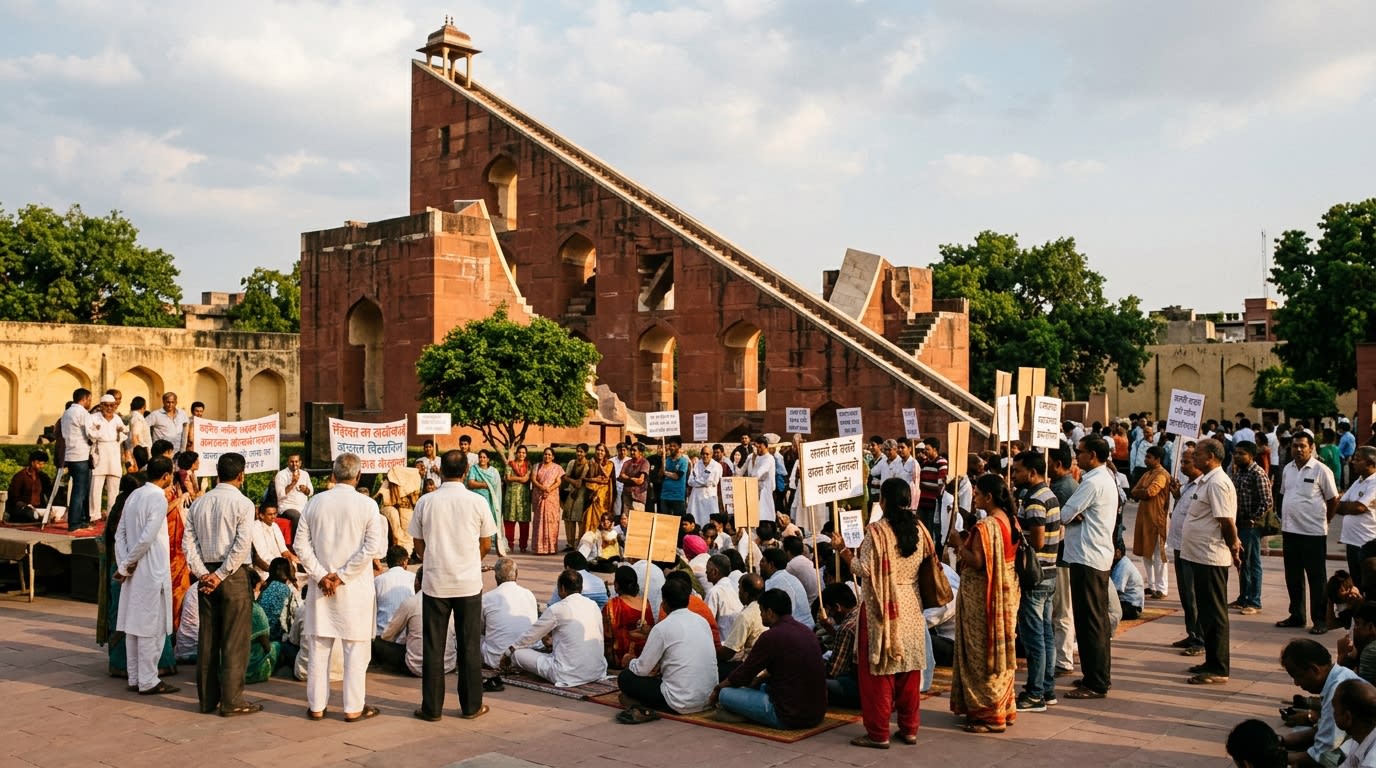
Delhi's iconic Jantar Mantar stands as a unique testament to India's rich history, having transitioned from an advanced astronomical observatory to a powerful symbol of public dissent. Originally known as Yantra Mantra, this 18th-century architectural marvel, located in the heart of the national capital, now primarily serves as a prominent venue for demonstrations and social movements, reflecting the vibrant democratic spirit of the nation.
Constructed in 1724 by Maharaja Sawai Jai Singh II of Jaipur, the observatory was commissioned at the behest of the then Mughal Emperor Muhammad Shah. Maharaja Jai Singh, a keen astronomer and scholar, built several such observatories across northern India, with the Delhi site being the first. Its primary purpose was to compile astronomical tables and predict the times and movements of the sun, moon, and planets.
The complex houses a collection of 13 architectural astronomical instruments, designed to measure the positions of celestial bodies with remarkable accuracy for its time. These massive structures, built from brick rubble and plastered with lime, allowed for precise calculations without the aid of telescopes, showcasing the sophisticated scientific understanding prevalent in India centuries ago.
Over the decades, Jantar Mantar's significance evolved dramatically. While still a heritage site, its open grounds and central location made it an accessible and visible platform for citizens to voice their grievances. From farmers' protests to social justice campaigns, it has become synonymous with civil action, embodying the right to peaceful assembly enshrined in the Indian Constitution.
This shift highlights a fascinating duality: a site dedicated to understanding the universe now serves as a crucible for earthly concerns and democratic expression. Its continued relevance, both as a historical monument and a living space for public discourse, underscores its enduring importance in India's cultural and political landscape.
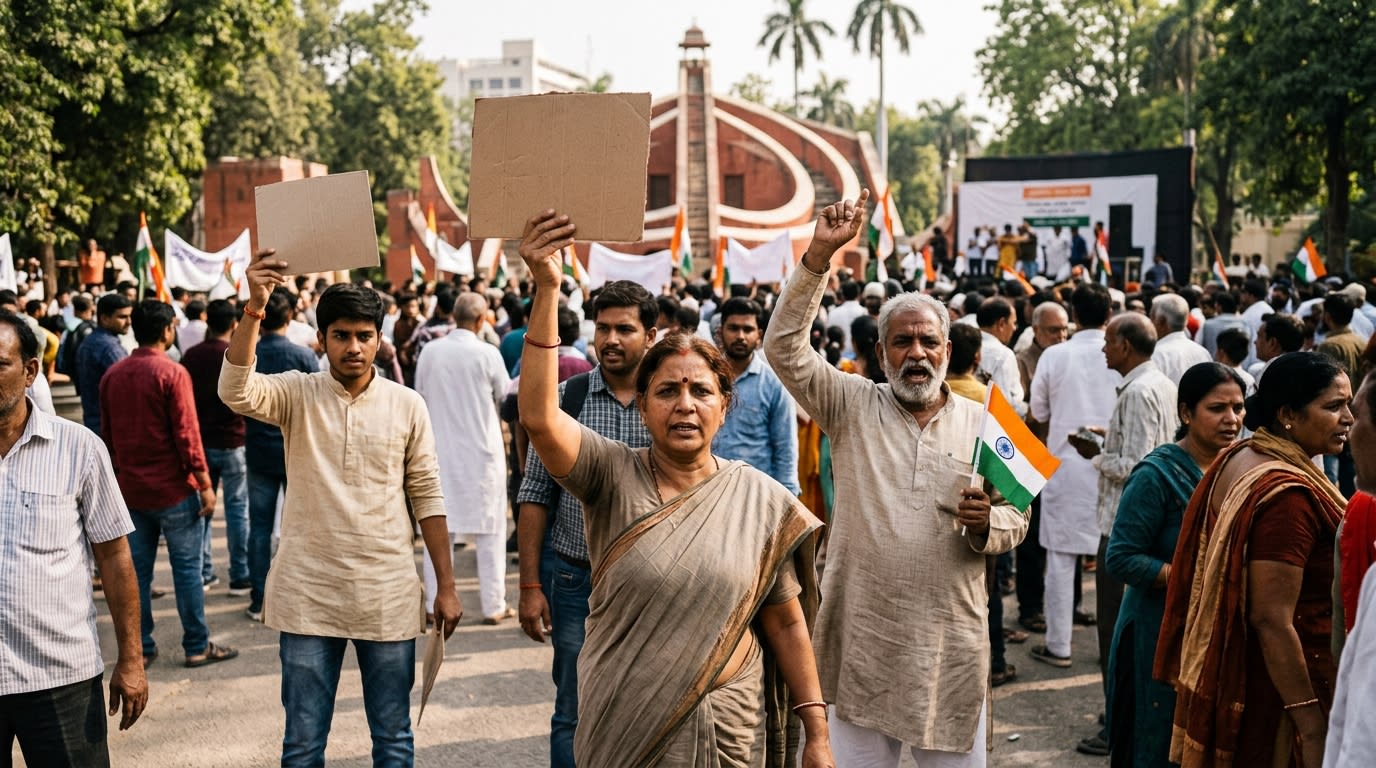
Rahul Gandhi Slams Jail Term for CJP Leaders, Affirms Jantar Mantar as Public Space

CJP Leaders Remanded After Jantar Mantar Protest; Government Faces 'Unofficial Emergency' Allegation
