New Magnetic-Particle Test Offers Highly Accurate Amoxicillin Allergy Detection
A groundbreaking magnetic-particle test demonstrates 98% sensitivity in identifying amoxicillin allergy, promising safer antibiotic use and combating AMR in India.
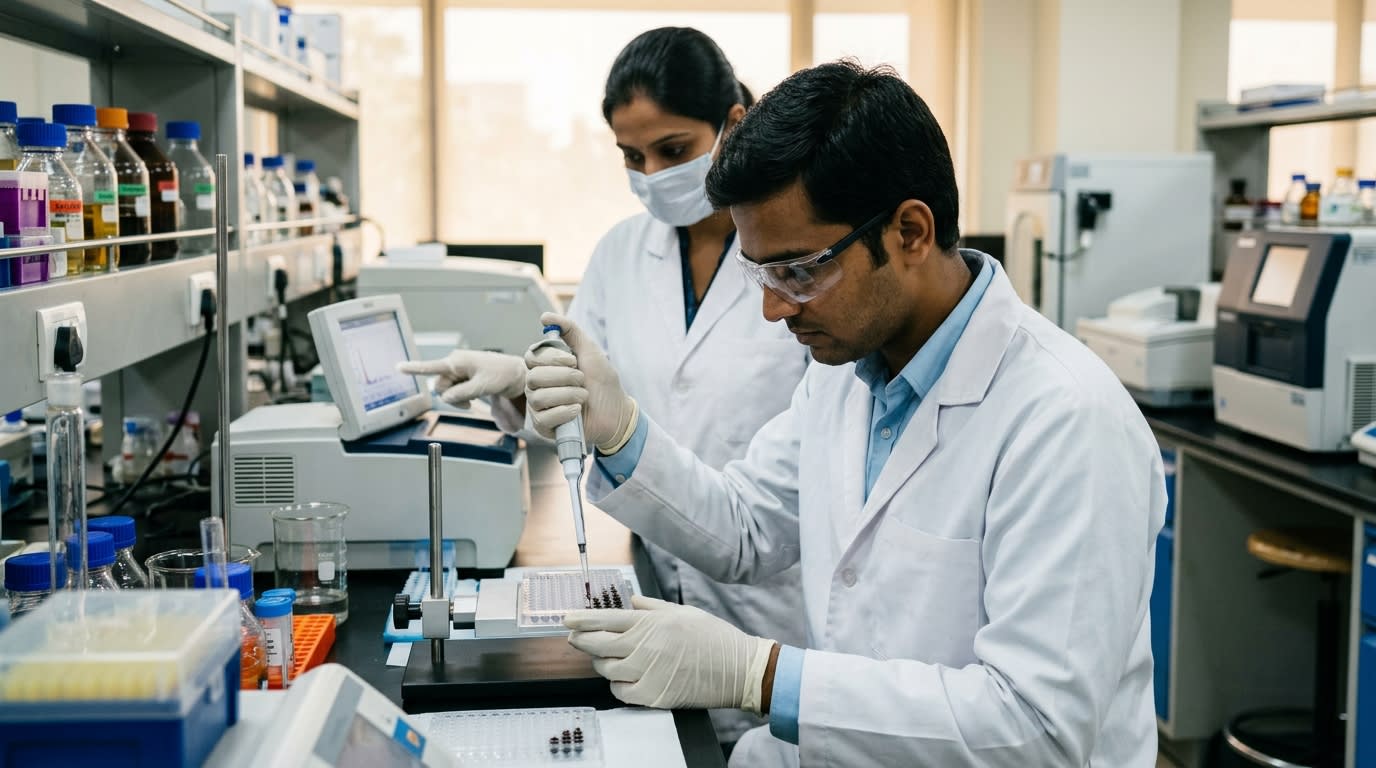
Revolutionary Test for Amoxicillin Allergy
A significant advancement in medical diagnostics has emerged with the development of a novel magnetic-particle based test capable of detecting amoxicillin allergy with an impressive 98% sensitivity. This breakthrough holds considerable promise for improving patient safety and optimising antibiotic prescriptions, particularly in regions like India where antibiotic usage is high.
Amoxicillin, a penicillin-class antibiotic, is one of the most commonly prescribed medications globally. However, accurately diagnosing an allergy to it has historically presented challenges. Traditional methods often involve skin prick tests or oral challenge tests, which can be time-consuming, carry a small risk of inducing a reaction, and sometimes yield inconclusive results. The new test aims to provide a faster, safer, and more definitive diagnosis.
The implications of precise allergy identification are profound. Misdiagnosing an amoxicillin allergy often leads to patients being prescribed alternative antibiotics, which can be broader-spectrum, more expensive, or less effective. This contributes significantly to the escalating global crisis of antimicrobial resistance (AMR) – a critical public health concern that India is actively grappling with. By accurately identifying true allergies, healthcare providers can ensure appropriate first-line antibiotic use, thereby preserving the efficacy of vital medications.
For India, a country with a vast population and a high burden of infectious diseases, this diagnostic innovation could be transformative. It offers the potential to streamline clinical decision-making, reduce unnecessary reliance on second-line antibiotics, and ultimately bolster national efforts against AMR. Widespread adoption could lead to improved patient outcomes, reduce healthcare costs associated with alternative treatments, and contribute to a more rational approach to antibiotic stewardship across the nation.

17-Year-Old Innovator Develops Wearable for Vehicle Detection

Hugh Jackman Backs Australian Sanctuary Campaign to Protect Koalas