New Study: Deer Rapidly Adapt to Crop Protection Measures
Research indicates deer and elk quickly habituate to deterrents like human shouts and bright lights, posing a challenge for farmers protecting crops.
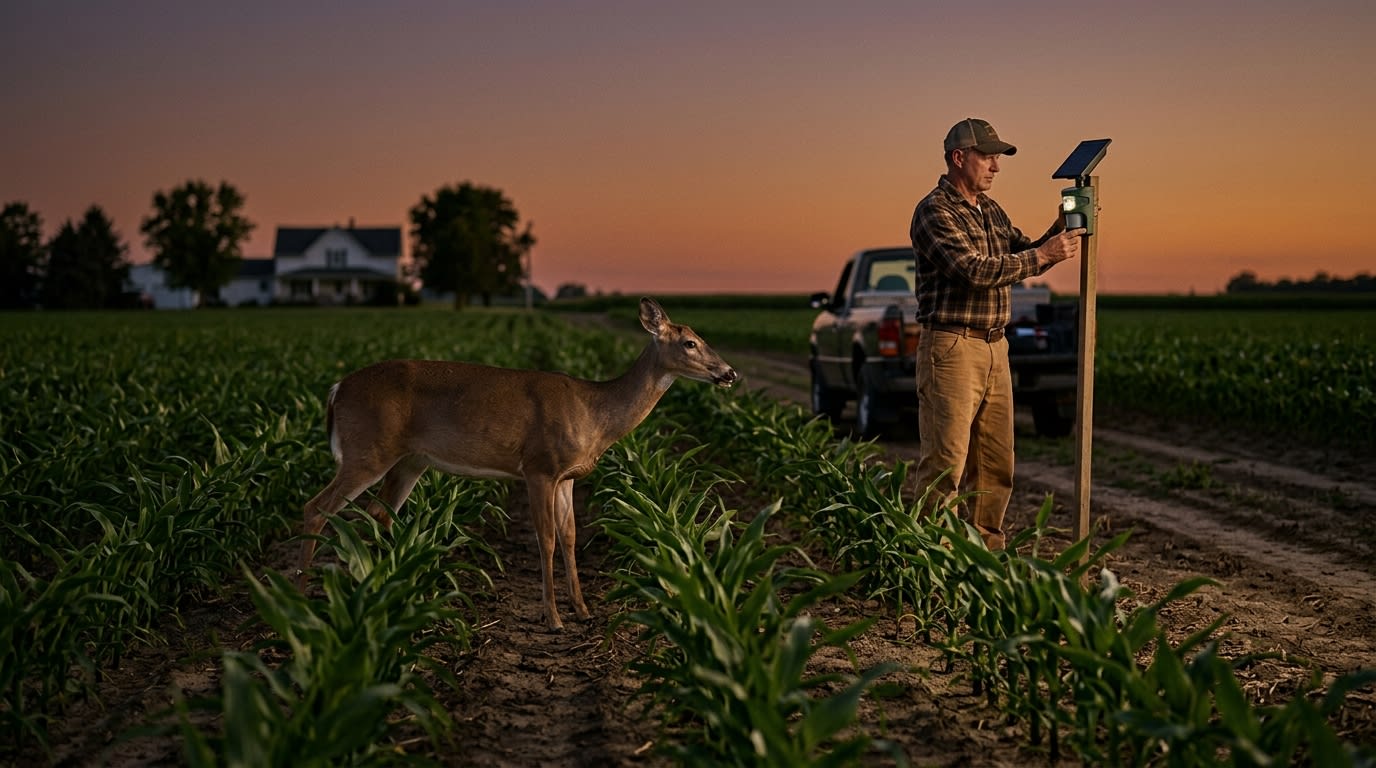
A recent study sheds light on the challenges of deterring wild animals like deer and elk from agricultural lands, a persistent issue for farmers globally, including in India where human-wildlife conflict often impacts livelihoods. The research indicates that while initial fright tactics can be effective, these animals quickly learn to ignore them.
Investigators found that loud human voices and bright, flashing lights proved most successful in scaring deer and elk away from crops. Interestingly, sounds of natural predators or domestic dog barks had significantly less impact, suggesting that direct human presence or a clear visual threat is more potent than indirect cues for these species.
However, the effectiveness of these deterrents was short-lived. Over a period of just six weeks, the study observed that deer and elk became accustomed to the stimuli, particularly when the deterrents were deployed in areas frequently exposed to human activity. This habituation rendered the initial tactics largely ineffective over time.
To overcome this rapid adaptation, researchers recommend employing a dynamic approach. They suggest diversifying the types of deterrents used, frequently changing their location, and introducing negative consequences for approaching crops, such as a mild, harmless electric shock if ethical considerations permit. Such strategies could offer valuable insights for Indian conservationists and farmers grappling with similar challenges from nilgai, wild boars, and other animals raiding fields.

17-Year-Old Innovator Develops Wearable for Vehicle Detection

Hugh Jackman Backs Australian Sanctuary Campaign to Protect Koalas