Tasmanian Devil Reintroduction on Maria Island Leads to Extinction of 3,000 Penguin Pairs
A conservation effort to save Tasmanian devils on Australia's Maria Island in 2012 inadvertently led to the disappearance of 3,000 little penguin pairs.
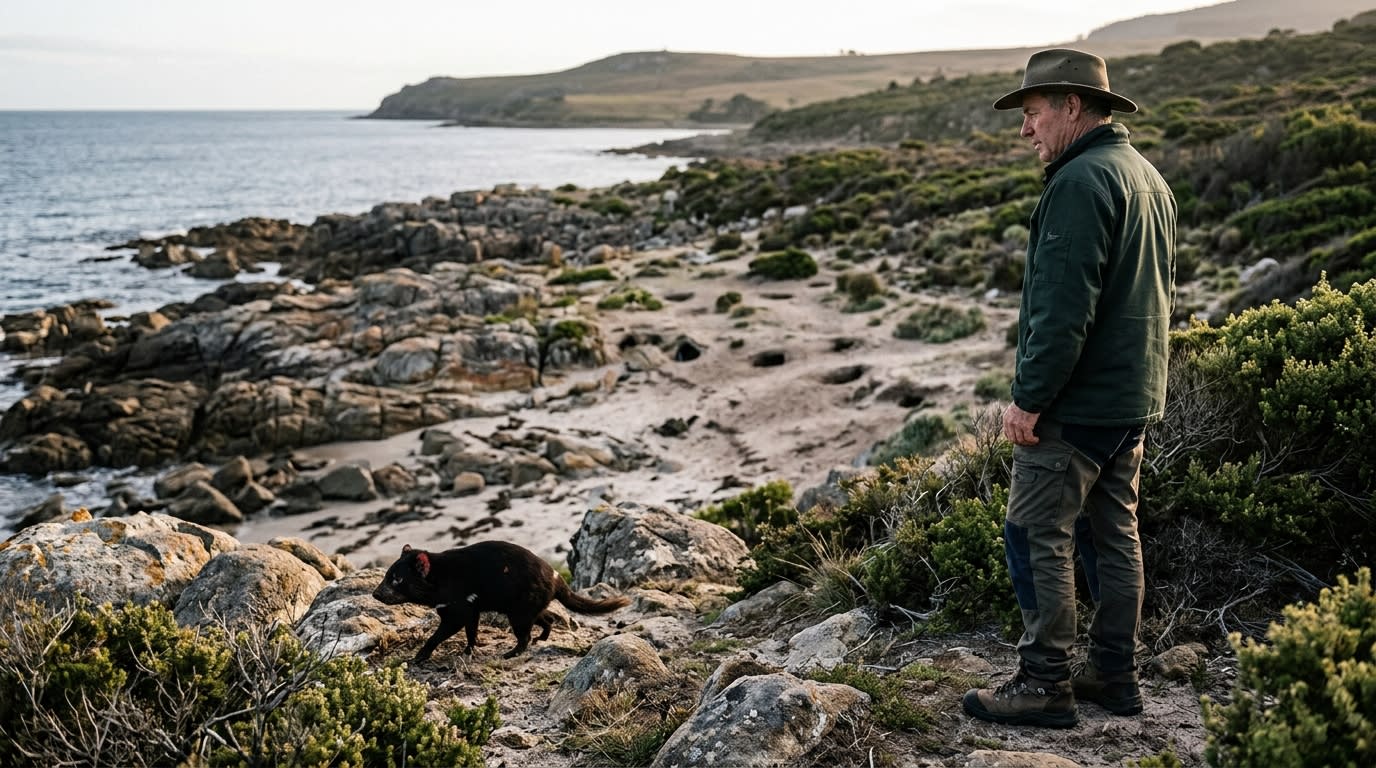
The picturesque Maria Island off Tasmania, Australia, recently witnessed a stark reminder of nature's delicate balance, following a conservation initiative intended to protect the endangered Tasmanian devil. A decade after 28 devils were introduced to the island as a safeguard against a devastating facial tumour disease, the population thrived, but at a severe cost to the local ecosystem, particularly its resident little penguin colonies.
The reintroduction project, initiated in 2012, aimed to establish an "insurance population" for the iconic marsupials, whose numbers in mainland Tasmania were plummeting due to the highly contagious disease. The strategy proved successful for the devils, with their population on Maria Island flourishing to an estimated 90 individuals, showcasing a remarkable recovery for the species in this isolated habitat.
However, a subsequent ecological survey unveiled a grim consequence of this success. Researchers discovered that Maria Island's entire population of little penguins had vanished. This disappearance accounts for an estimated 3,000 breeding pairs, effectively wiping out the island's colonies. Experts attribute this rapid decline directly to the predatory impact of the introduced Tasmanian devils, highlighting the unforeseen challenges in managing complex ecosystems.
This incident serves as a crucial case study for conservationists worldwide, including those in India, where similar reintroduction programmes are undertaken to bolster endangered species populations. It underscores the critical importance of exhaustive ecological impact assessments and long-term monitoring to prevent unintended disruptions to existing biodiversity. For India, with its rich and varied wildlife and ongoing efforts to reintroduce species like cheetahs, understanding such global outcomes is vital to ensure that conservation successes do not inadvertently lead to other ecological imbalances.
The Maria Island episode is a poignant reminder that while saving one species is paramount, the broader ecological web must be considered with utmost caution. It reinforces the need for comprehensive strategies that account for potential trophic cascades and predator-prey dynamics before altering natural habitats.

17-Year-Old Innovator Develops Wearable for Vehicle Detection
Hugh Jackman Backs Australian Sanctuary Campaign to Protect Koalas