The Day India Demanded Freedom: The Quit India Resolution of 1942
Discover how Mahatma Gandhi and the Indian National Congress passed the Quit India Resolution on 14 July 1942, marking a crucial turning point in India's struggle for independence.
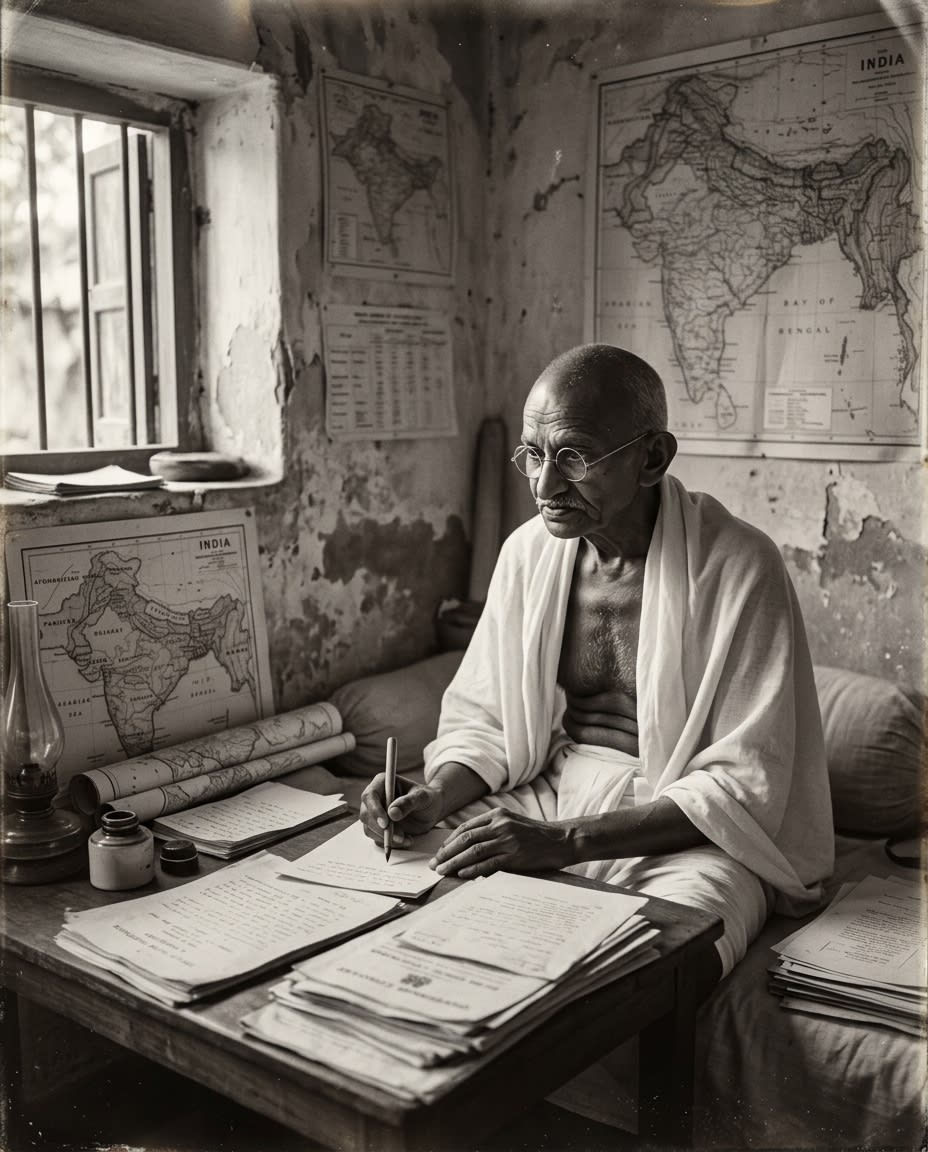
As the tumultuous year of 1942 unfolded, the world was gripped by the horrors of World War II. Yet, even amidst the global conflict, the unwavering demand for India's independence from British colonial rule continued to reverberate across the subcontinent. It was a period of immense strategic importance, where the fate of nations hung in the balance, and for India, the moment had arrived to make its most decisive declaration yet.
The preceding years had seen growing frustration among Indian leaders and the populace. British promises of post-war reforms and potential self-governance had repeatedly fallen short, most notably with the failure of the Cripps Mission in March 1942. Sir Stafford Cripps' proposals, offering dominion status after the war, were rejected by the Indian National Congress as too little, too late. Mahatma Gandhi, the moral compass of the independence movement, had grown increasingly convinced that British presence in India was not only exploitative but also hindering India's ability to defend itself or contribute meaningfully to the global struggle against fascism. He famously called the Cripps offer "a post-dated cheque on a crashing bank."
It was against this backdrop of global war and national disillusionment that the Indian National Congress Working Committee (CWC) convened in Wardha, a small town in Maharashtra, from July 6 to July 14, 1942. The atmosphere was charged with intense debate and introspection. Gandhi presented a draft resolution, radical in its demand for immediate British withdrawal, emphasizing that India could only truly assist the Allied cause as a free nation. While some senior leaders, including Jawaharlal Nehru and Maulana Abul Kalam Azad, initially expressed reservations about launching a mass movement during wartime, fearing it might hinder the Allied effort or invite harsh repression, Gandhi's moral conviction and strategic clarity ultimately swayed them.
On 14 July 1942, after days of fervent discussion and deliberation, the Congress Working Committee passed the historic "Quit India" Resolution. The resolution unequivocally called for the immediate end of British rule in India. It declared that "the immediate ending of British rule in India is an urgent necessity both for the sake of India and for the success of the cause of the United Nations." It further asserted that "a free India will assure success to the Allied arms." Crucially, it sanctioned the launching of a mass struggle on non-violent lines under Gandhi's leadership if the British failed to comply with the demand. This was a direct challenge to the very foundation of the British Empire.
The passing of the Quit India Resolution marked a profound turning point in India's struggle for independence. It moved the goalpost from mere dominion status to complete and unconditional sovereignty. It served as a powerful declaration of India's unwavering resolve and its refusal to be a pawn in the imperial game. The resolution galvanized the Indian masses, preparing them for a final, decisive push against colonial rule. It was a clear signal to the British that compromise was no longer an option; only complete freedom would suffice.
Although the resolution was passed in Wardha, its full impact was felt weeks later. On August 8, 1942, the All-India Congress Committee (AICC) ratified the resolution in Bombay (now Mumbai), where Mahatma Gandhi delivered his iconic "Do or Die" speech, urging every Indian to act as a free individual. This speech officially launched the Quit India Movement. The British responded swiftly and brutally, arresting Gandhi and almost the entire leadership of the Congress within hours. Despite the leadership vacuum, the movement erupted spontaneously across the country, characterized by widespread protests, strikes, and acts of civil disobedience, demonstrating the deep-seated desire for freedom among ordinary Indians.
The Quit India Movement, born from the resolution passed on that fateful day in Wardha, profoundly weakened the moral and administrative authority of the British Raj. While the movement was suppressed with force, it made it unequivocally clear to the British that their continued rule in India was untenable. It significantly accelerated the timeline for India's independence, which finally arrived five years later in 1947. The 14th of July 1942, therefore, stands as a testament to the power of collective resolve and the unwavering spirit of a nation determined to chart its own destiny.

The Nation's Farewell: Bal Gangadhar Tilak's Ashes Immersed

Napoleon's Eastern Gambit: How a French Alliance Sealed Tipu Sultan's Fate
