The Sacrifice That Redrew India's Map: Potti Sreeramulu and Andhra State
The story of Potti Sreeramulu's fast unto death in 1952, which led to the creation of Andhra State and became a catalyst for India's linguistic reorganisation.
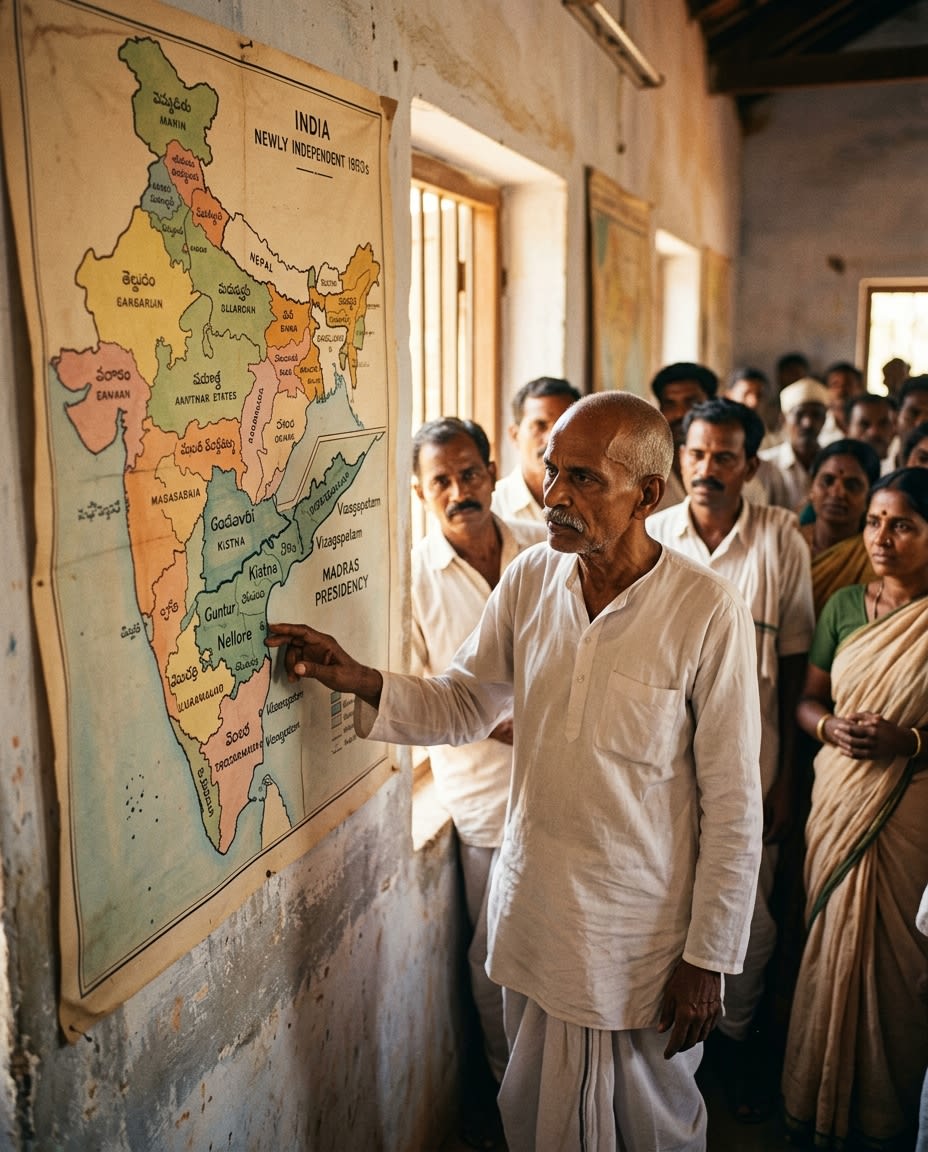
The Demand for Andhra: A Nation's Early Challenge
In the nascent years of independent India, the nation grappled with the immense task of consolidating its diverse regions and forging a unified identity. Among the many challenges was the growing demand for states to be reorganised along linguistic lines. One of the most vocal and persistent calls came from the Telugu-speaking people, who sought a separate state, 'Andhra,' to be carved out of the existing Madras Presidency. This demand stemmed from a desire to preserve and promote their distinct language and culture, feeling marginalized within the larger, multi-lingual administrative unit.
The central government, led by Prime Minister Jawaharlal Nehru, initially hesitated to concede to these demands. Concerns over national unity, potential fragmentation, and the administrative complexities of redrawing internal boundaries weighed heavily on the leadership. However, the linguistic fervor was strong, especially in regions like Andhra, where the movement for a separate state had deep roots, tracing back to the early 20th century. The political climate was ripe for a decisive moment, and it arrived in the form of a dedicated Gandhian.
Potti Sreeramulu, a revered freedom fighter and staunch follower of Mahatma Gandhi's principles, emerged as the pivotal figure in this movement. Having actively participated in the Salt Satyagraha and the Quit India Movement, Sreeramulu was known for his unwavering commitment and selflessness. Recognising the government's reluctance and the urgency of the Telugu people's aspirations, he decided to undertake a fast unto death, a powerful form of protest rooted in the Gandhian tradition, to press for the creation of Andhra State. He began his fast on October 19, 1952, from a house in Madras.
As the days turned into weeks, Potti Sreeramulu's fast captured the nation's attention. His health rapidly deteriorated, and medical bulletins became front-page news. Public anxiety mounted, particularly in the Telugu-speaking areas, where rallies, demonstrations, and hartals (strikes) became increasingly frequent. Prime Minister Nehru appealed to Sreeramulu to break his fast, promising to consider the demand, but Sreeramulu remained resolute, insisting on an immediate and clear commitment for a separate state. The government found itself in a difficult position, caught between its desire for stability and the moral weight of a revered freedom fighter's sacrifice.
Tragically, after 58 days of fasting, Potti Sreeramulu passed away on December 15, 1952. His death sent shockwaves across the country, particularly in the Andhra region, where it ignited an unprecedented wave of protests, riots, and widespread unrest. The situation quickly escalated, threatening law and order and demonstrating the intensity of public sentiment. Facing immense pressure and the risk of further destabilisation, the central government was compelled to act swiftly. Just four days later, on December 19, 1952, Prime Minister Nehru announced the government's decision to form a separate Andhra State.
The creation of Andhra State, formally inaugurated on October 1, 1953, with Kurnool as its capital, marked a watershed moment in India's political history. Potti Sreeramulu's sacrifice not only led to the realisation of the Telugu people's long-cherished dream but also set a crucial precedent for the linguistic reorganisation of states across India. It directly led to the formation of the States Reorganisation Commission in 1953, which subsequently recommended the redrawing of India's internal map based on linguistic principles. His act of ultimate selflessness fundamentally reshaped India's federal structure and continues to be remembered as a testament to the power of individual conviction in a democratic nation.

India's Diplomatic Stand: How Nehru Navigated the Suez Crisis

The 1969 Presidential Election: When a 'Conscience Vote' Divided a Nation's Dominant Party
