US, Saudi Arabia Finalise Landmark Civilian Nuclear Cooperation Deal
The United States and Saudi Arabia have reached a pivotal civilian nuclear cooperation agreement, aiming to bolster the Kingdom's energy sector.
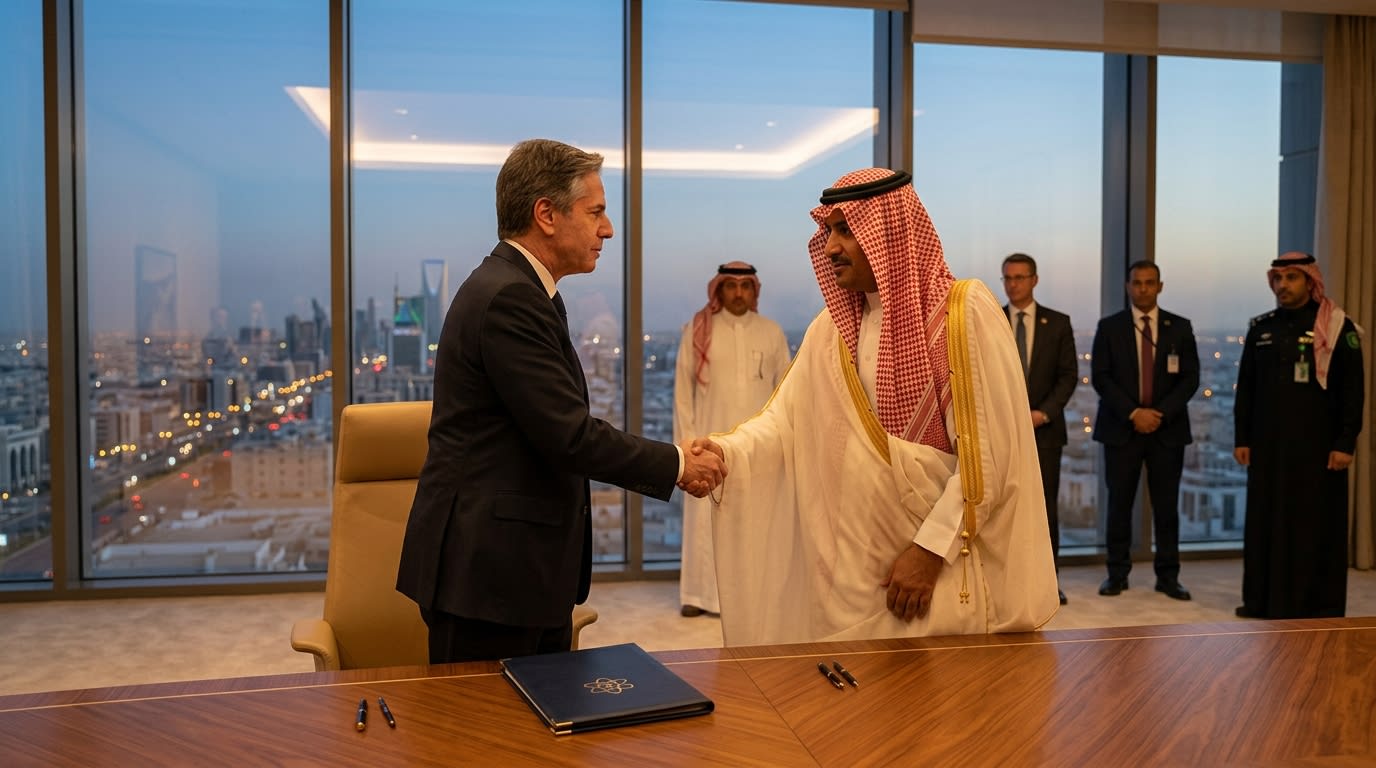
The United States has recently announced a significant civilian nuclear cooperation agreement with Saudi Arabia, marking a major development in the two nations' strategic partnership. The landmark deal aims to facilitate the peaceful use of nuclear technology within the Kingdom, primarily for energy generation and other civilian applications.
This agreement, which has been under discussion for some time, is expected to involve the transfer of US nuclear technology, expertise, and potentially materials to Saudi Arabia, all under strict international safeguards. The primary objective is to support Saudi Arabia’s ambitious Vision 2030 plan, which seeks to diversify its economy away from oil and gas, with nuclear energy playing a crucial role in meeting its growing power demands and reducing carbon emissions.
For Washington, the pact reinforces its strategic presence in the Middle East and aims to deepen its alliance with Riyadh amidst evolving regional dynamics. It also underscores efforts to counter the influence of other global powers in the region. The deal will likely face scrutiny regarding non-proliferation commitments and the robust implementation of international oversight mechanisms to ensure the technology is used exclusively for peaceful purposes.
From an Indian perspective, this development holds considerable significance. As a major energy consumer and a nation with substantial strategic interests in the Middle East, New Delhi will closely monitor the implications of this agreement for regional stability and energy security. India has its own established civilian nuclear programme and has been a proponent of responsible nuclear energy use, making it an interested observer in such global nuclear cooperation initiatives.
The agreement now moves towards the next stages, including potential review by the US Congress, which will assess its terms and conditions. The successful implementation of the deal could pave the way for Saudi Arabia to develop its own nuclear power infrastructure, contributing to global energy diversification while posing important questions about nuclear governance and proliferation controls in a geopolitically sensitive region.

Macron Urges Global Community to Uphold UN Principles Amidst International Crises

Anthropic Unveils New Claude AI Amidst Global Calls for Development Slowdown
