West Bengal Professors Oppose Inter-University Transfer Bill, Call It 'Attack on Education'
West Bengal's academic community is up in arms against a state government bill allowing inter-university faculty transfers, fearing it will worsen faculty shortages and weaken institutions.
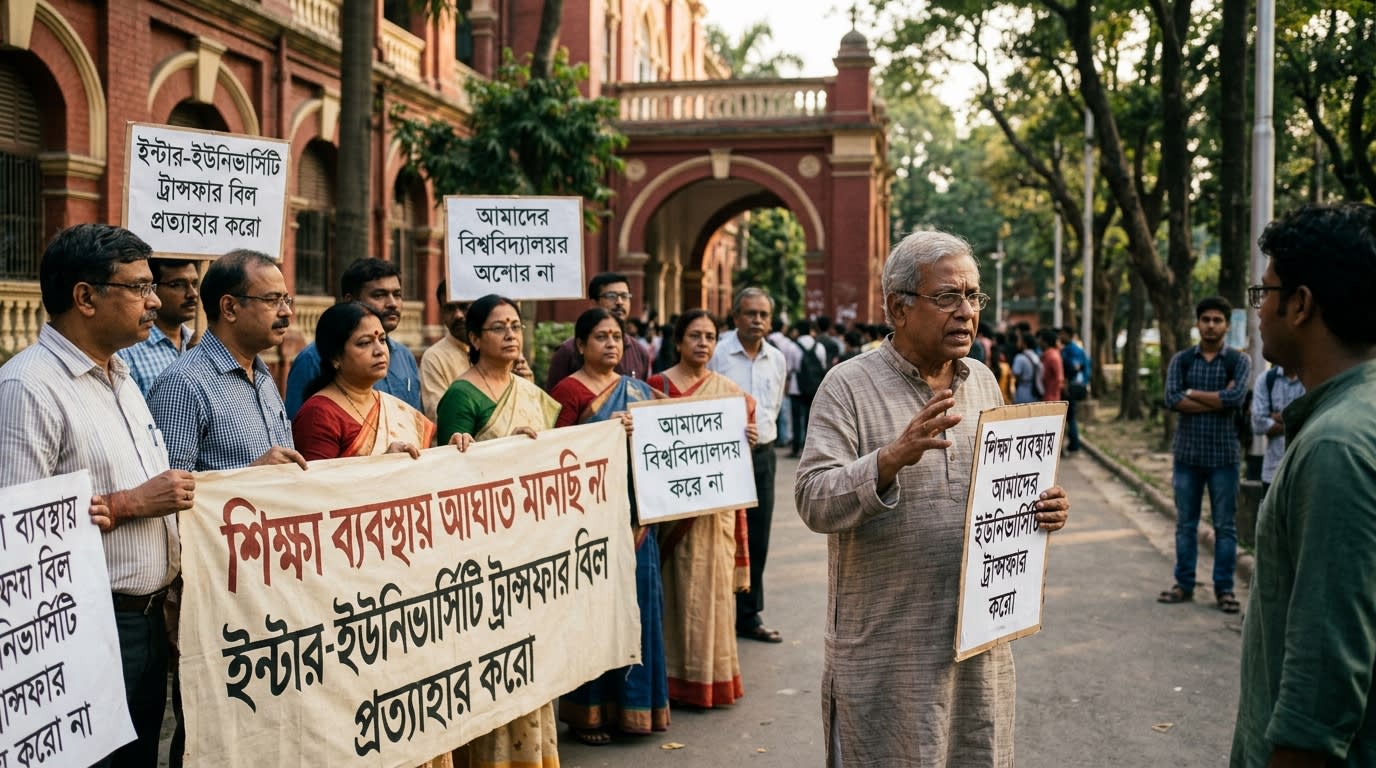
West Bengal's academic community is strongly opposing a new state government bill that seeks to facilitate inter-university transfers of professors. Educators across the state fear that the proposed legislation could severely undermine the autonomy and stability of higher education institutions, which are already grappling with significant challenges.
The West Bengal College and University Teachers’ Association (WBCUTA) has voiced vehement objections, describing the bill as a direct "attack on education." They argue that allowing arbitrary transfers of faculty members would exacerbate the existing severe shortage of professors in many universities. Such moves, they contend, could disrupt academic continuity, impact research initiatives, and ultimately diminish the quality of instruction for students.
Concerns are mounting that the bill could be used to transfer academics without clear rationale, potentially leading to politically motivated decisions rather than those based on academic necessity. This, professors believe, would further weaken universities that are already struggling with resource constraints and the need to maintain a consistent academic environment. The association highlighted that stable faculty is crucial for building robust academic departments and fostering a conducive learning atmosphere.
In response to these apprehensions, the WBCUTA has announced its intention to formally appeal to the Governor of West Bengal. Given the Governor's constitutional role as the Chancellor of all state universities, the association hopes for an intervention to prevent the bill from becoming law, urging a re-evaluation of its potential long-term impact on the state's higher education landscape.

India Aims to Uproot Drug Trade by 2029: Amit Shah

PM Modi to Convene High-Level Meeting to Chart Government's Next Priorities
