A. P. J. Abdul Kalam: The Visionary Who Became India's People's President
Celebrate the birth of A. P. J. Abdul Kalam, India's 'Missile Man' and 'People's President', born on 15 October 1931. Learn about his journey from Rameswaram to leading India's scientific and political spheres, inspiring millions.
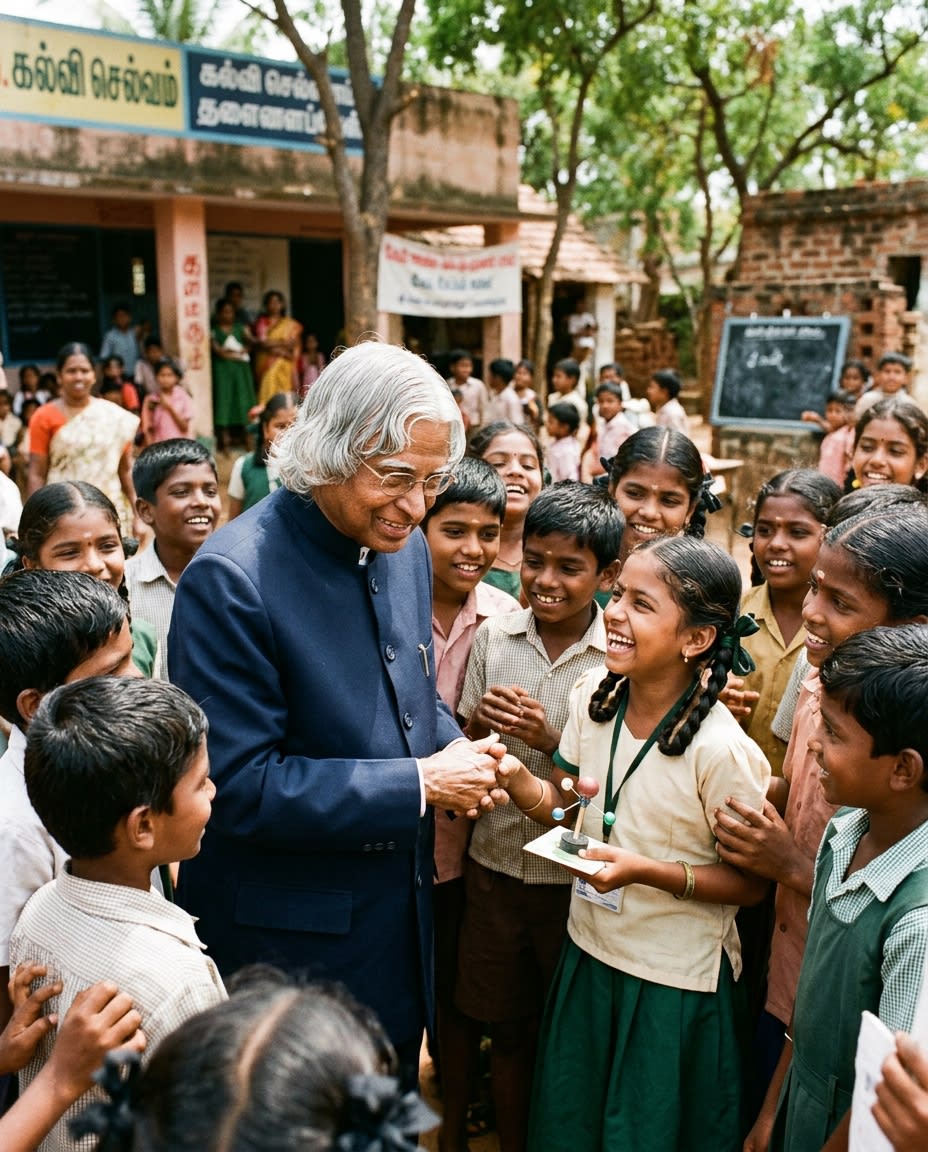
On 15 October 1931, a child named Avul Pakir Jainulabdeen Abdul Kalam was born into a humble Tamil Muslim family in Rameswaram, Tamil Nadu. His father was a boat owner and imam of a local mosque, and his mother a homemaker. Growing up in a modest household, young Kalam faced early struggles, selling newspapers to supplement his family's income. Despite these challenges, his insatiable curiosity and passion for learning shone through, laying the foundation for an extraordinary life dedicated to science, education, and public service.
Kalam pursued his education with dedication, eventually graduating in aeronautical engineering from the Madras Institute of Technology. His career began at the Aeronautical Development Establishment of the Defence Research and Development Organisation (DRDO) and later at the Indian Space Research Organisation (ISRO). It was during his tenure at ISRO that he made significant contributions to India's satellite launch vehicle program, playing a pivotal role in the development of the SLV-III, India's first indigenous satellite launch vehicle, which successfully deployed the Rohini satellite in orbit in 1980.
His most significant contributions, however, came in the realm of ballistic missile and nuclear weapons programs. As the Chief Scientific Adviser to the Prime Minister and the Secretary of the DRDO from 1992 to 1999, Kalam was instrumental in the development of India's Agni and Prithvi missiles. His leadership during the Pokhran-II nuclear tests in 1998 earned him the moniker 'Missile Man of India' and solidified India's position as a nuclear power. These achievements were critical in enhancing India's strategic autonomy and national security.
In 2002, A. P. J. Abdul Kalam was elected as the 11th President of India. During his term, often referred to as the 'People's Presidency', he endeared himself to the masses with his approachable demeanor, unwavering commitment to public service, and profound belief in the potential of India's youth. He consistently advocated for a developed India by 2020, articulating a clear vision for economic growth, technological advancement, and social equity. His interactions with students and scientists across the country became legendary, inspiring a generation to dream big and work towards nation-building.
Beyond his scientific and political roles, Kalam was a prolific writer and orator. His books, such as "Wings of Fire," "India 2020: A Vision for the New Millennium," and "Ignited Minds," became bestsellers, sharing his life experiences, philosophical insights, and vision for India's future. He believed deeply in the power of education and innovation to transform society, often urging young people to cultivate a scientific temper and contribute to the nation's progress.
Dr. A. P. J. Abdul Kalam passed away on 27 July 2015, while delivering a lecture to students at IIM Shillong, a testament to his lifelong dedication to teaching and inspiring. His passing evoked widespread grief across the nation. Today, his birth anniversary, 15 October, is celebrated as World Students' Day by the United Nations, recognizing his immense contributions to education and his love for students. His legacy continues to be a beacon of inspiration, reminding Indians of the power of perseverance, knowledge, and selfless service in shaping a brighter future for the nation.