The October Revolution: How Russia's Upheaval Ignited India's Socialist Dreams
Explore how the 1917 October Revolution in Russia profoundly inspired India's freedom struggle, shaping its socialist ideals and anti-colonial resolve.
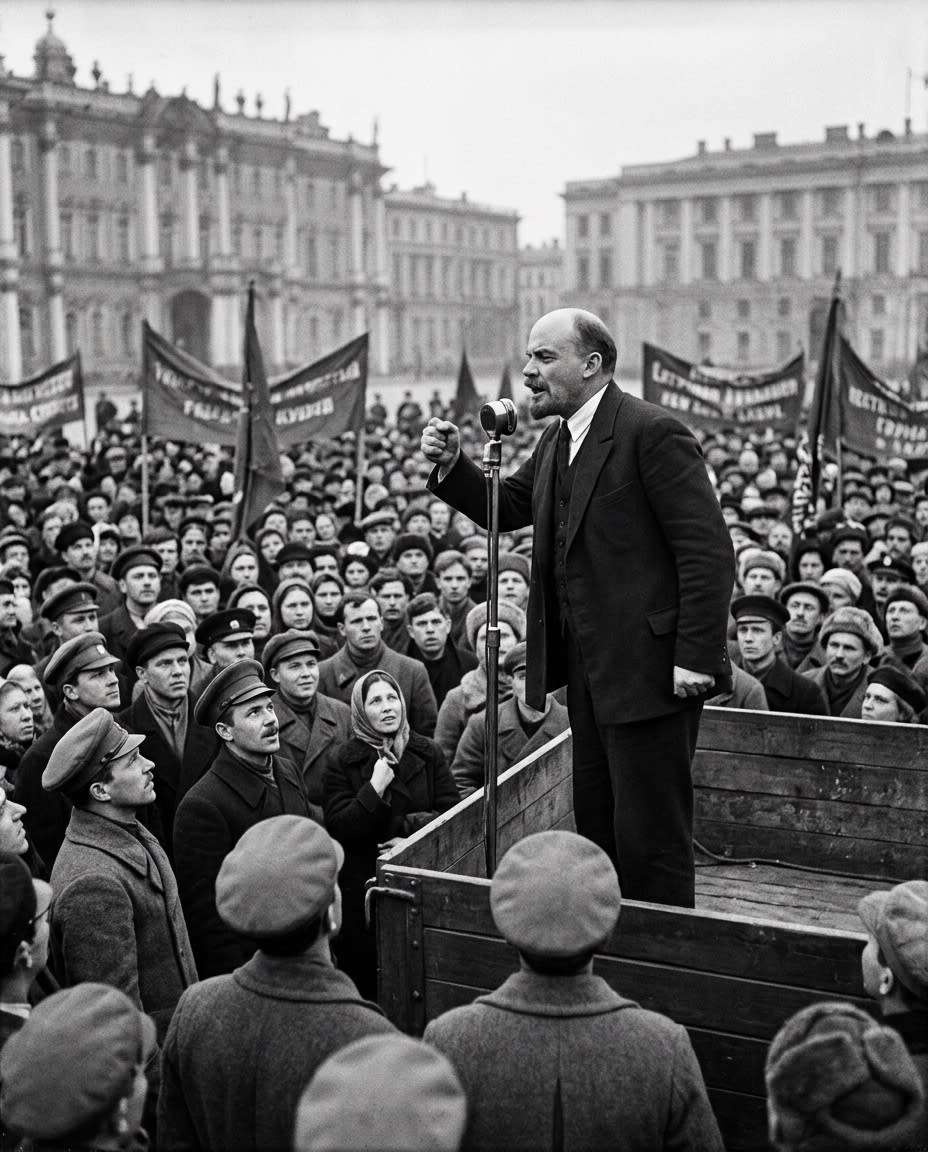
In the tumultuous year of 1917, as the First World War raged and empires crumbled, a seismic event unfolded in Russia that would send ripples across the globe, profoundly impacting distant lands like India. The October Revolution, led by Vladimir Lenin and the Bolshevik Party, was not merely a change of government; it was a radical reordering of society that promised an end to class distinctions, private property, and imperial exploitation. This audacious experiment in socialism, born out of widespread discontent and the devastation of war, captured the imagination of many who yearned for liberation from colonial rule.
The revolution saw the overthrow of the Provisional Government, which had itself replaced the centuries-old Tsarist autocracy earlier that year. Lenin's call for 'Peace, Land, and Bread' resonated with millions of war-weary peasants and workers. The Bolsheviks, a faction of the Russian Social Democratic Labour Party, rapidly consolidated power, establishing the world's first socialist state. Their vision was not just for Russia, but for a global revolution that would dismantle capitalism and imperialism everywhere.
For the Western colonial powers, the Russian Revolution was a source of profound alarm, threatening the very foundations of their economic and political order. However, for colonized nations across Asia and Africa, it offered a new beacon of hope. The Bolsheviks' anti-imperialist stance, their condemnation of colonial exploitation, and their promise of self-determination for all peoples provided a powerful ideological weapon against their oppressors. It suggested that a different future, free from Western dominance, was not only possible but actively being forged.
In India, where the nationalist movement for independence was gaining momentum, the events in Russia were followed with keen interest. Leaders and intellectuals, many of whom were already exploring alternative political and economic models, found inspiration in the socialist experiment. The ideas of class struggle, economic equality, and national self-determination, central to Bolshevik ideology, resonated deeply with the plight of a nation exploited by a foreign power.
Figures like Jawaharlal Nehru, who would later become India's first Prime Minister, were particularly drawn to the Soviet model. Nehru visited the Soviet Union in 1927 and was deeply impressed by its efforts in planned economic development and social restructuring. He, along with other progressive leaders within the Indian National Congress, began to advocate for a socialist pattern of society for independent India, influenced by the successes and failures they observed in Russia.
The October Revolution thus played a significant, albeit indirect, role in shaping India's path to freedom and its post-independence trajectory. It provided an ideological framework for anti-colonial struggle, encouraged the growth of socialist and communist movements within India, and contributed to the vision of a non-aligned foreign policy that sought to chart an independent course away from both Western capitalism and Soviet communism. The distant upheaval in Russia became a powerful, enduring symbol of resistance and an alternative vision for a newly independent India.